
Birch Lumber Prices — 2026 Buying Guide
Betula alleghaniensis · Domestic Hardwood · Janka 1260
Birch stands as the unsung hero of American kitchen cabinets, prized for its uniform grain that paints beautifully and machines cleanly without the wild patterns that fight for attention. Cabinet shops and furniture makers consistently choose birch when they need reliable performance and a neutral canvas for finishes. With yellow birch commanding premium prices and paper birch offering budget-friendly alternatives, this species delivers exceptional value across multiple grades and applications.
After 25 years building kitchens, I have learned that birch saves you more money in labor than you spend extra on material compared to cheaper alternatives. The species machines so predictably that I rarely get tear-out or burning, which means less sanding time and fewer rejected pieces. Here is something most buyers miss: always request yellow birch over paper birch for face frames and doors, because the density difference creates finish absorption problems when you mix species within the same project.
About Birch
Yellow birch (Betula alleghaniensis) grows throughout the northeastern United States and eastern Canada, thriving in mixed hardwood forests from Maine to Minnesota and south through the Appalachians. This cold-climate species develops slowly, creating dense, stable lumber that has supplied American woodworkers for centuries.
The heartwood ranges from light reddish-brown to deeper amber tones, while sapwood appears nearly white to pale yellow. Grain runs straight and tight with a fine, even texture that shows minimal figure beyond occasional small pin knots and subtle flame patterns. The surface displays a natural luster that responds beautifully to both clear finishes and paint, making it ideal when you need wood that disappears under finish rather than competing with it.
Compared to hard maple, birch offers similar workability at typically lower cost, though it lacks maple’s premium reputation and resale value. It machines cleaner than oak without the pronounced grain patterns, and provides more consistency than cherry without the color variation challenges. Paper birch delivers many of the same working properties as yellow birch but with lower density and strength, making species selection crucial for structural applications.
Birch plywood revolutionized furniture making in the mid-20th century, becoming the backbone of Scandinavian modern design and American production furniture. Russian birch plywood set quality standards worldwide, though domestic alternatives now compete effectively. Native American communities traditionally used birch bark for canoes and containers, while the wood itself supplied everything from tool handles to industrial spools before plastics dominated those markets.
What Birch Costs in 2026
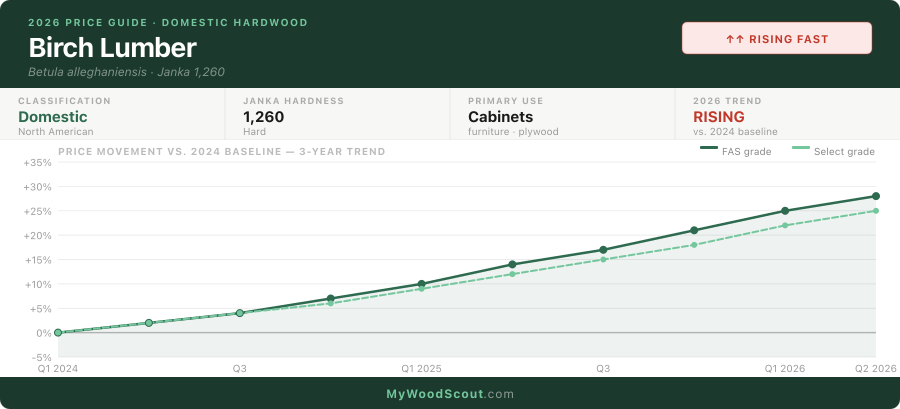
Rising prices reflect increased demand from cabinet manufacturers switching to domestic species amid import uncertainties, plus tighter timber harvests in traditional birch regions. This trend will likely continue through 2026 as housing construction maintains strong levels and consumers increasingly prefer domestic hardwoods over imports. Buy current inventory needs now rather than waiting, because spring logging restrictions could create supply gaps that push prices even higher.
Key Price Drivers
- Furniture manufacturing demand drives consistent consumption as birch remains the go-to species for painted furniture lines where maple costs too much
- Plywood production consumes massive quantities of birch veneer logs, creating competition between solid lumber and veneer buyers that elevates pricing
- Northern forest harvesting regulations increasingly restrict cutting seasons and methods, limiting supply during critical winter months when logging traditionally peaks
- Cabinet shops switching from particle board to solid wood construction create new demand streams as consumers demand real wood over engineered products
- European birch plywood imports face ongoing trade uncertainties and shipping delays, pushing buyers toward domestic solid lumber alternatives
- Climate change affects northern growing regions where birch thrives, with younger forests producing smaller diameter logs that yield less premium lumber
See report
Know Exactly What to Pay Before You Buy
7 thicknesses · 3 grade tiers · 5 regions · milling premiums · 3-year trend. Verified from domestic hardwood dealers nationwide.
5 US regions
3-year trend
Milling premiums
Instant PDF
Get the Birch Report — $9.99 →
Working Properties & Finishing
Machining
Birch cuts cleanly with standard carbide tooling, though keeping blades sharp prevents the burning that occurs when dense wood meets dull steel. Feed rates should stay moderate because the hardness can overwhelm router bits and cause chatter in thin stock. The biggest mistake is rushing cuts through thick birch with underpowered equipment – this species rewards patience with glass-smooth surfaces that need minimal sanding.
Joinery & Assembly
Yellow birch glues exceptionally well with both PVA and polyurethane adhesives, creating joints stronger than the surrounding wood when properly clamped. Pre-drilling prevents splitting in hard birch, especially near edges where the density can cause screws to bind and crack the wood. Mortise and tenon joints cut cleanly and hold tight, though the hardness requires sharp chisels and careful paring to avoid crushing fibers.
Finishing
Birch accepts stain more evenly than most hardwoods, rarely showing the blotching issues that plague cherry or pine, though paper birch can show some variation. The tight grain structure works beautifully under paint, creating smooth surfaces that rival maple for kitchen cabinet applications. Tannin content stays low enough to avoid chemical reactions with water-based finishes, and the natural color remains stable under UV exposure unlike cherry that darkens dramatically. Shellac builds quickly on birch and brings out subtle grain patterns without overpowering the neutral character. For painted applications, I recommend Zinsser BIN primer specifically because it bonds tenaciously to birch and prevents any potential tannin bleeding through topcoats.
Target 6-8% moisture content for interior millwork, as birch moves moderately in service but remains stable when properly acclimated. The species dries well but slowly, so expect longer lead times for custom orders and plan extra time for shop acclimation before machining.
Domestic birch sourcing supports North American forest management while reducing transportation emissions compared to European alternatives. FSC certification remains widely available from major suppliers as birch forests regenerate reliably under proper management practices. Regional availability favors Great Lakes and Northeast buyers, though transportation costs make Western sourcing expensive despite abundant Pacific Northwest alternatives.
Before You Buy — What to Know
Inspect boards carefully for the distinction between yellow birch and paper birch, as dealers sometimes mix species in the same bundle despite significant density differences. Check end grain for tight, even growth rings that indicate slow growth and stability, avoiding pieces with rapid color transitions that suggest juvenile wood. Ask specifically about kiln drying schedules since birch requires careful moisture removal to prevent case hardening and internal stress that shows up later as warping.
Choosing the Right Birch
| Application | Recommended | Key Consideration |
|---|---|---|
| Cabinets | Primary use | See full species report for grade recommendations |
| Furniture | Suitable | See full species report for grade recommendations |
| Plywood | Suitable | See full species report for grade recommendations |
| Turning | Suitable | See full species report for grade recommendations |
Janka Hardness: 1260 — Hard and durable. Suitable for flooring and high-wear applications.
Where to Buy Birch Near You
Birch is widely available from hardwood dealers and sawmills across the US. Use the WoodScout directory to find rated suppliers near you — many sell direct to hobbyists and small shops.
All Hardwood Lumber Dealers →
Minnesota
Wisconsin
Pennsylvania
North Carolina
Ohio
California
Texas
Search 3,700+ hardwood dealers and sawmills across all 50 states — with ratings, reviews, and contact info.