
Sapele Lumber Prices — 2026 Buying Guide
Entandrophragma cylindricum · Exotic Hardwood · Janka 1410
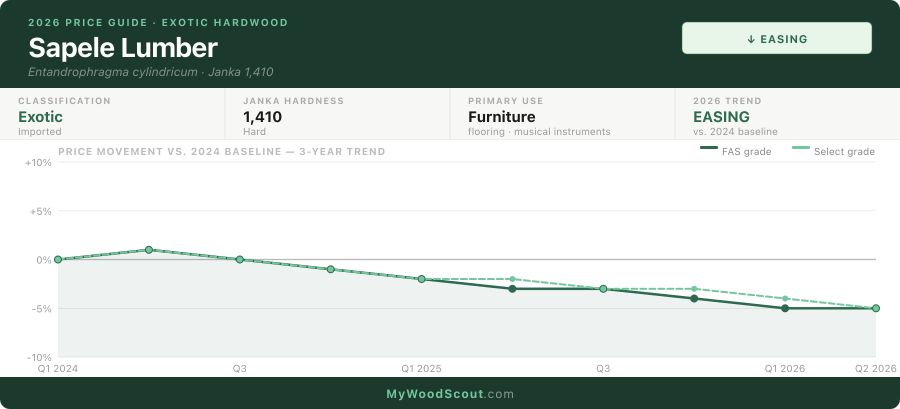
Sapele delivers the warm tones and workability of genuine mahogany with a distinctive interlocked grain that produces stunning ribbon figure when quartersawn. This West African species has become the go-to choice for high-end furniture makers and custom cabinet shops seeking mahogany character without the premium price tag. With prices easing in 2026 due to increased plantation supply, Sapele offers exceptional value for projects demanding both beauty and stability.
After working with Sapele for over two decades, I have learned that the key to perfect results is using a 15-degree shear angle on planer knives and taking light passes at 16-18 feet per minute feed rate. The interlocked grain will tear out mercilessly if you rush the machining, but when worked properly, it produces some of the most beautiful cabinet doors I have ever made. Here is something most dealers will not tell you: always buy your Sapele from the same log run if you need multiple boards, because color variation between trees can be dramatic enough to ruin a matched set.
About Sapele
Sapele grows naturally across tropical West and Central Africa, from Sierra Leone to Uganda, thriving in dense rainforest conditions where trees can reach heights of 200 feet with trunk diameters exceeding 6 feet. The species is now widely cultivated in plantations throughout its native range, helping to stabilize supply while reducing pressure on old-growth forests. These plantation-grown trees typically reach commercial size in 25-30 years, producing lumber with consistent grain patterns and fewer defects than wild-harvested timber.
The heartwood ranges from golden to dark reddish-brown, often displaying subtle color variation within a single board that adds depth and character to finished pieces. The defining characteristic is the interlocked grain that alternates direction every few growth rings, creating a pronounced ribbon or stripe figure when quartersawn that catches light beautifully. Flat-sawn boards show a more traditional cathedral pattern but lack the dramatic figure that makes quartersawn Sapele so desirable. The wood has a naturally lustrous surface that requires minimal finishing to achieve a rich, warm glow.
Sapele is often called African mahogany and shares many working properties with genuine mahogany, though it is slightly harder and denser at 1410 Janka hardness versus mahogany at 900. Unlike genuine mahogany, Sapele grain interlocks consistently, making it more stable but requiring sharper tools and careful feed rates to avoid tearout. Compared to other mahogany substitutes like Meranti or Lauan, Sapele offers superior durability and a more refined grain structure. The species works more predictably than true African mahogany species like Khaya, with less tendency toward woolly grain or difficult finishing.
Sapele gained prominence in the 1960s as supplies of genuine mahogany became restricted, quickly becoming the preferred choice for high-end acoustic guitar backs and sides due to its tonal qualities and attractive figure. British furniture makers adopted the species for reproduction antiques, finding its color and grain patterns closely matched aged mahogany. The wood became standard for yacht interiors and luxury car dashboards, applications demanding both beauty and dimensional stability in challenging environments.
What Sapele Costs in 2026
The easing price trend reflects plantation timber reaching maturity after decades of investment, creating a supply surge that should continue through 2027. Buyers should take advantage of current pricing to stock up, as demand from emerging markets may tighten supplies again within 3-5 years. This is an ideal time to purchase quartersawn material for future projects, as the current oversupply includes exceptional figured lumber at historically low prices.
Key Price Drivers
- Plantation supply maturation – New African plantations planted 25-30 years ago are reaching harvest age, significantly increasing available volume and driving down prices from peak levels
- CITES regulation stability – Unlike some exotic species, Sapele remains unrestricted under international trade agreements, allowing steady import flows without bureaucratic delays or permit costs
- Currency exchange rates – Strengthening US dollar against West African currencies makes imports more affordable for American buyers, directly impacting landed costs
- Shipping logistics improvements – New direct shipping routes from African ports to US markets have reduced transportation costs and delivery times by 20-30 percent
- Competition from alternative species – Increased availability of other mahogany substitutes like Utile and Sipo gives buyers more options, creating downward price pressure
- Reduced luxury market demand – Post-pandemic shift away from high-end furniture and yacht markets has decreased demand for premium quartersawn material
See report
Know Exactly What to Pay Before You Buy
7 thicknesses · 3 grade tiers · 5 regions · milling premiums · 3-year trend. Verified from specialty importers nationwide.
5 US regions
3-year trend
Milling premiums
Instant PDF
Get the Sapele Report — $9.99 →
Working Properties & Finishing
Machining
Use carbide-tipped blades with 40-60 teeth for crosscutting and 24-30 teeth for ripping to minimize tearout from the interlocked grain. Feed rates should stay between 15-20 feet per minute on planers and shapers – any faster and you will get significant chipout on the ribbon figure areas. The species routes cleanly with sharp HSS or carbide bits, but climb cutting often produces better results than conventional cutting when working end grain or highly figured sections.
Joinery & Assembly
Sapele glues excellently with both PVA and polyurethane adhesives, though the natural oils may require light sanding of joint surfaces that have been exposed to air for more than a few hours. Pre-drilling is essential for screws within 3 inches of board ends due to the interlocked grain, which can cause unexpected splitting along grain direction changes. Mortise and tenon joints hold exceptionally well due to the alternating grain structure that resists splitting under stress.
Finishing
The species accepts both oil and film finishes beautifully with minimal blotching, though a light coat of diluted shellac or commercial conditioner helps achieve even color on flat-sawn boards. Sapele has low tannin content so there are no issues with water-based topcoats, and the natural oils actually help film finishes adhere better than on many other exotic species. The wood darkens gradually to a rich reddish-brown over several years of light exposure, making initial color matching critical for future additions. I recommend General Finishes Arm-R-Seal for most applications – it penetrates well and builds to a durable satin sheen that highlights the ribbon figure perfectly. Avoid pre-staining as the natural color development over time will create uneven appearance.
Target 6-8 percent moisture content for interior applications, as Sapele moves moderately in service with seasonal humidity changes. The species air-dries slowly and benefits from extended kiln schedules to prevent case-hardening, so expect to pay slightly more for properly dried lumber. Interlocked grain actually provides better dimensional stability than straight-grained species, making Sapele an excellent choice for wide panels and tabletops.
Most commercially available Sapele now comes from managed plantations rather than wild harvest, making it one of the more sustainable exotic hardwood choices. FSC certification is widely available and recommended for commercial projects requiring documentation. The species is not CITES listed and faces no current trade restrictions, though buyers should verify legal harvest documentation as some West African countries have implemented export controls on raw logs.
Before You Buy — What to Know
Always inspect boards for the cedar-like scent that indicates proper kiln drying – improperly dried Sapele retains a sour smell that suggests moisture issues. Ask specifically about quarter-sawn versus flat-sawn when ordering, as many suppliers mix both cuts without clear labeling, and the figure difference is dramatic. Avoid boards with white sapwood inclusion unless you plan to work around it, as the color contrast is too strong for most applications and the sapwood is significantly softer.
Choosing the Right Sapele
| Application | Recommended | Key Consideration |
|---|---|---|
| Furniture | Primary use | See full species report for grade recommendations |
| Flooring | Suitable | See full species report for grade recommendations |
| Musical instruments | Suitable | See full species report for grade recommendations |
| Veneer | Suitable | See full species report for grade recommendations |
Janka Hardness: 1410 — Hard and durable. Suitable for flooring and high-wear applications.
Where to Buy Sapele Near You
Sapele is available from specialty hardwood importers and exotic wood dealers. Local availability varies — online retailers often carry a wider selection but charge a regional premium. The WoodScout directory lists specialty dealers by state.
All Hardwood Lumber Dealers →
Minnesota
Wisconsin
Pennsylvania
North Carolina
Ohio
California
Texas
Search 3,700+ hardwood dealers and sawmills across all 50 states — with ratings, reviews, and contact info.