
Walnut Lumber Prices — 2026 Buying Guide
Juglans nigra · Domestic Hardwood · Janka 1010
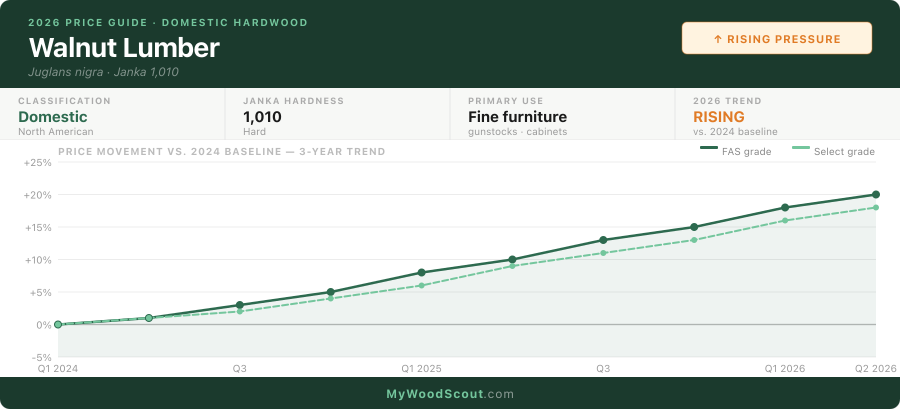
American Black Walnut stands as the undisputed king of domestic hardwoods, commanding premium prices for its distinctive chocolate-brown heartwood and sophisticated grain patterns. High-end furniture makers, custom kitchen builders, and firearms craftsmen drive consistent demand for this species, which delivers both visual drama and excellent workability. In 2026, rising prices reflect continued strong demand from luxury markets while domestic supply faces pressure from both export demand and land development reducing native stands.
After building hundreds of walnut kitchens, I always tell clients to embrace the sapwood rather than paying extra to have it all cut away. When properly steamed and blended, that cream-colored sapwood creates natural highlights that make the chocolate heartwood pop even more dramatically. I have seen too many woodworkers waste money chasing all-heartwood boards when a skilled layout can turn that color contrast into the most striking feature of the entire kitchen.
About Walnut
American Black Walnut grows naturally across the eastern United States from southern Maine to northern Florida, with the finest commercial stands concentrated in the Midwest from Ohio through Iowa and down into Arkansas and Tennessee. The species thrives in rich bottomland soils and can live over 200 years, reaching diameters of 4-6 feet in prime growing conditions.
The heartwood displays rich chocolate brown to purplish-brown tones with darker streaking, while sapwood appears creamy white to pale yellow, creating dramatic contrast that many woodworkers prize. Grain runs straight to slightly wavy with occasional figured patterns including curly, burl, and crotch figure commanding premium prices. The wood exhibits medium to large pores with a somewhat coarse texture, and fresh-cut surfaces often show a subtle purple cast that mellows to warm brown with exposure to light.
Walnut surpasses other domestic species like Cherry and Maple in terms of luxury positioning, though it machines more easily than hard Maple and shows less seasonal movement than Red Oak. European Walnut offers lighter coloring and different grain character but costs significantly more, while tropical species like Brazilian Rosewood may rival its beauty but face import restrictions and sustainability concerns. Claro Walnut from California provides similar working properties with more dramatic figure but limited availability keeps it in specialty markets.
Walnut earned its reputation through centuries of use in fine furniture, with American craftsmen in the 1700s and 1800s creating heirloom pieces that showcase the wood eternal appeal. The species became synonymous with gunstock manufacturing due to its stability, shock resistance, and attractive appearance, with military contracts during both World Wars significantly impacting available domestic supply. Modern applications in high-end kitchen cabinetry, architectural millwork, and contemporary furniture maintain its status as the premium choice when budget allows for the finest domestic hardwood.
What Walnut Costs in 2026
The rising price trend reflects both supply constraints from mature forest harvesting limits and increasing demand from export markets paying premium prices for American walnut logs. This trend will likely continue through 2026-2027 as domestic furniture makers compete with international buyers for the same limited resource. Buyers should consider purchasing lumber now for projects planned within the next 12 months, as prices typically increase 8-15% annually in rising markets.
Key Price Drivers
- Limited domestic supply from mature trees — walnut requires 50-80 years to reach commercial size, and development pressure removes productive forestland faster than new trees mature
- Strong export demand particularly from China and Europe — foreign buyers pay premium prices for high-grade American walnut logs, reducing domestic availability
- Luxury market resilience — walnut maintains demand even during economic downturns as wealthy consumers continue commissioning custom furniture and high-end renovations
- Figured wood premiums — curly, burl, and crotch walnut can command 3-10x standard pricing, with speculators driving up costs for exceptional pieces
- Regional supply variations — Midwest storms, droughts, and invasive species like thousand cankers disease threaten productive growing regions
- Gunstock industry competition — firearms manufacturers maintain steady demand for specific grades, creating baseline pricing support across all walnut markets
See report
Know Exactly What to Pay Before You Buy
7 thicknesses · 3 grade tiers · 5 regions · milling premiums · 3-year trend. Verified from domestic hardwood dealers nationwide.
5 US regions
3-year trend
Milling premiums
Instant PDF
Get the Walnut Report — $9.99 →
Working Properties & Finishing
Machining
Use sharp carbide tooling with 40-tooth blades for crosscuts and 24-tooth for rips, maintaining moderate feed rates to prevent burning the natural oils in the wood. Walnut machines cleanly with minimal tearout when tools stay sharp, but dull blades will burnish the surface and create heat marks that are difficult to sand out. Route with climb cuts when possible to minimize chipout on figured pieces, and always take light passes on end grain to prevent spelching at exits.
Joinery & Assembly
Walnut glues excellently with both PVA and polyurethane adhesives, though the natural oils require fresh-cut surfaces for optimal bond strength. Pre-drill all screw holes to prevent splitting, especially near board ends, and use sharp bits to avoid compressing the wood fibers. Traditional mortise and tenon joints work beautifully in walnut, but test-fit carefully since the wood compresses slightly under clamping pressure.
Finishing
Walnut takes stain unevenly due to density variations between heartwood and sapwood, so I recommend using the natural color with clear finishes whenever possible. The wood responds beautifully to oil-based finishes like Watco Danish Oil or tung oil that enhance the natural grain without building excessive surface thickness. Avoid water-based stains unless you want blotchy results, and be aware that walnut will continue darkening with UV exposure over several years. Shellac works well as a sealer under lacquer topcoats, and I particularly recommend General Finishes Arm-R-Seal for kitchen applications where durability matters. The natural tannins in walnut can react with iron hardware, so use stainless steel or brass fasteners in high-moisture applications.
Target 6-8% moisture content for interior projects, allowing lumber to acclimate in your shop for at least two weeks before milling. Walnut exhibits moderate seasonal movement with most expansion across the grain, making it more stable than oak but less stable than cherry for wide panels.
Domestic walnut sourcing offers clear advantages over imported alternatives, with shorter transportation distances and support for American forest management practices. Look for FSC-certified suppliers who source from sustainably managed forests, though certification remains less common in walnut than other domestic species. Regional availability varies significantly, with Midwest suppliers typically offering better prices and selection than coastal markets due to proximity to primary growing regions.
Before You Buy — What to Know
Always inspect boards in person when possible, checking for hidden defects like mineral stain, insect damage, and checking that may not show in online photos. Ask dealers about kiln schedules since walnut dried too quickly can develop honeycombing and internal checking that appears later during machining. Verify the origin since some dealers mix lower-grade imported walnut with domestic stock, and expect to pay 20-40% more for steamed lumber if you want consistent color matching between heartwood and sapwood.
Choosing the Right Walnut
| Application | Recommended | Key Consideration |
|---|---|---|
| Fine furniture | Primary use | See full species report for grade recommendations |
| Gunstocks | Suitable | See full species report for grade recommendations |
| Cabinets | Suitable | See full species report for grade recommendations |
| Turning | Suitable | See full species report for grade recommendations |
Janka Hardness: 1010 — Moderate hardness. Suitable for most furniture and millwork applications.
Where to Buy Walnut Near You
Walnut is widely available from hardwood dealers and sawmills across the US. Use the WoodScout directory to find rated suppliers near you — many sell direct to hobbyists and small shops.
All Hardwood Lumber Dealers →
Minnesota
Wisconsin
Pennsylvania
North Carolina
Ohio
California
Texas
Search 3,700+ hardwood dealers and sawmills across all 50 states — with ratings, reviews, and contact info.