
Birdseye Maple Lumber Prices — 2026 Buying Guide
Acer saccharum · Domestic Hardwood · Janka 1450
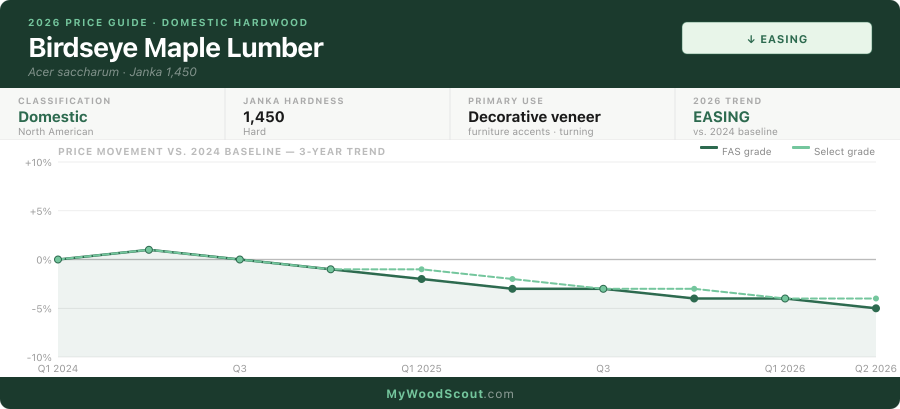
Birdseye maple stands as the crown jewel of figured hardwoods, displaying thousands of tiny circular patterns that create an almost three-dimensional optical effect across the wood surface. High-end furniture makers and custom cabinet builders prize this rare grain anomaly for accent panels, drawer fronts, and decorative inlays where visual impact matters most. While technically the same species as hard maple, only a tiny percentage of sugar maple trees develop this coveted figuring, making genuine birdseye maple one of the most sought-after domestic hardwoods. In 2026, easing prices present the best buying opportunity woodworkers have seen in years for this premium material.
After 25 years of working with figured woods, I have learned that birdseye maple requires a completely different mindset than regular hard maple when incorporating it into kitchen projects. The biggest mistake I see woodworkers make is treating every birdseye board the same – each piece demands individual assessment because the figure density and grain direction vary dramatically even within single boards. My go-to application is using birdseye for raised panel centers in upper cabinet doors, where the figure creates incredible depth under kitchen lighting, but I always order 30 percent extra material because you will inevitably encounter sections where the figure tears out during machining. Here is the insider tip most suppliers will not tell you: birdseye figure actually extends deeper into the board than it appears on the surface, so you can often sand through minor tearout and still retain beautiful pattern underneath.
About Birdseye Maple
Birdseye maple originates exclusively from sugar maple trees (Acer saccharum) found primarily in the Great Lakes region, with the highest concentration of figured trees occurring in Michigan, Wisconsin, and southern Ontario. The phenomenon appears most frequently in trees growing in specific soil conditions and climate zones, though scientists still debate the exact mechanisms that trigger this unique grain formation during the tree development process.
The distinctive birdseye figure manifests as small, circular or oval-shaped patterns scattered randomly across the wood surface, resembling tiny bird eyes peering through the grain. These patterns typically measure 1/8 to 1/4 inch in diameter and create a subtle three-dimensional effect that shifts with viewing angle and lighting conditions. The base wood exhibits the characteristic cream to light tan coloration of hard maple, but the birdseye areas often display slightly darker amber or reddish-brown tones that enhance the contrast. Individual boards can contain anywhere from dozens to hundreds of these eye formations, with density and size varying dramatically even within the same tree.
Unlike other figured maples such as curly or quilted varieties, birdseye maple displays its pattern consistently across both face grain and edge grain surfaces, making it particularly valuable for projects requiring visual continuity. The figure intensity ranges from subtle sparse patterns to dense concentrated displays that rival the most exotic imported species for visual impact. While sharing the same physical properties as standard hard maple, birdseye commands prices 10 to 20 times higher due to its rarity and unpredictable occurrence in nature.
Historically, birdseye maple gained prominence during the Federal period of American furniture making in the early 1800s, when cabinetmakers discovered its potential for creating stunning veneer panels and decorative inlays. Notable applications include piano cases by Steinway, high-end automotive dashboards in luxury cars of the 1930s and 1940s, and contemporary custom kitchen installations where homeowners desire unique natural character. The wood became so associated with fine American craftsmanship that antique birdseye maple furniture commands premium prices at auction houses worldwide.
What Birdseye Maple Costs in 2026
The current price easing reflects reduced demand from commercial furniture manufacturers who shifted to more cost-effective alternatives during recent economic uncertainty, creating opportunities for individual woodworkers and small shops. This downward trend will likely continue through 2026 as inventory levels normalize after several years of supply chain disruptions that artificially inflated prices. Smart buyers should consider stocking up on premium grades now, as birdseye pricing historically rebounds quickly when luxury markets recover and supply remains perpetually constrained by natural scarcity.
Key Price Drivers
- Extreme natural scarcity drives base pricing since only 1-2 percent of sugar maple trees develop birdseye figure, with no reliable method to predict which trees will produce this coveted pattern
- Figure quality variation creates massive price sprees within the species, as dense consistent patterns command 5-10 times more than sparse scattered eyes, making grade selection critical for buyers
- Sawing and processing challenges increase costs significantly because birdseye lumber requires specialized techniques to avoid destroying the delicate figure during milling operations
- Strong demand from high-end furniture makers and custom cabinet shops creates consistent market pressure, as birdseye remains the preferred choice for luxury applications where cost is secondary to visual impact
- Limited geographic sourcing concentrates supply in Great Lakes region, making transportation costs and regional availability major factors in final pricing to end users
- Veneer production competition removes the finest logs from lumber markets, as veneer manufacturers can pay premium prices by maximizing yield from limited birdseye timber resources
See report
Know Exactly What to Pay Before You Buy
7 thicknesses · 3 grade tiers · 5 regions · milling premiums · 3-year trend. Verified from domestic hardwood dealers nationwide.
5 US regions
3-year trend
Milling premiums
Instant PDF
Get the Birdseye Maple Report — $9.99 →
Working Properties & Finishing
Machining
Birdseye maple demands extremely sharp carbide tooling and reduced feed rates to prevent the delicate figure from tearing out during machining operations. Use a triple-chip grind blade with 80+ teeth for sheet goods and a sharp crosscut blade with negative rake angle for solid lumber to minimize spelching around the eye formations. The figured areas machine differently than surrounding wood, creating inconsistent cutting resistance that can cause burning if you push standard feed rates. Always test cuts on sample pieces first, as each board behaves differently depending on figure density and grain orientation.
Joinery & Assembly
Pre-drilling is essential when working near heavy figure concentrations, as the grain disruption around birdseye formations creates unpredictable splitting patterns under fastener stress. Standard wood glues perform well with birdseye maple, but allow extra clamp time since the figured areas can create uneven glue absorption and longer cure requirements. Mechanical joints like mortise and tenon work beautifully, but orient the figure away from high-stress areas where the disrupted grain structure might compromise joint strength over time.
Finishing
Birdseye maple accepts stain unevenly due to density variations between figured and plain areas, often creating a blotchy appearance that obscures rather than enhances the natural pattern. I recommend clear finishes or very light golden stains that complement rather than compete with the figure – Minwax Golden Oak applied sparingly can warm the tone without hiding details. The species responds exceptionally well to film finishes like lacquer or conversion varnish that build surface depth and enhance the three-dimensional optical effect of the eyes. Water-based finishes tend to raise grain more aggressively in figured areas, requiring extra sanding between coats. For my kitchen projects, I consistently achieve stunning results with Sherwin Williams ProClassic waterborne alkyd, which provides excellent clarity and durability while enhancing the natural figure contrast.
Target 6-8 percent moisture content for interior applications, but allow extra acclimation time since figured areas dry at different rates than surrounding wood. Birdseye maple moves slightly more than plain hard maple due to the grain disruption, so account for additional seasonal movement in wide panels or glue-ups. The figure areas themselves remain relatively stable, but stress concentrations around eye formations can create minor checking if the wood experiences rapid moisture changes.
Domestic birdseye maple sourcing offers significant environmental advantages over imported figured species, with most material harvested from sustainably managed forests in Michigan and Wisconsin under FSC or SFI certification programs. The Great Lakes region maintains healthy sugar maple populations, and selective harvesting of figured trees does not impact overall forest ecosystem health since birdseye represents a genetic anomaly rather than a distinct population. Regional availability varies significantly by season and harvest schedules, making relationships with local suppliers valuable for consistent access to quality material.
Before You Buy — What to Know
Always inspect birdseye maple in person when possible, as photos rarely capture the true figure density and quality – what looks spectacular online may disappoint in person. Ask dealers specifically about the source mill and processing methods, since some suppliers sell partially figured or edge-grain material as premium birdseye at full prices. Look for consistent eye distribution across the board width rather than figure concentrated only along edges, which indicates the lumber was cut specifically to maximize apparent figure. Verify that the price reflects actual figure quality, as dealers sometimes charge premium birdseye prices for lightly figured material that should sell as standard hard maple.
Choosing the Right Birdseye Maple
| Application | Recommended | Key Consideration |
|---|---|---|
| Decorative veneer | Primary use | See full species report for grade recommendations |
| Furniture accents | Suitable | See full species report for grade recommendations |
| Turning | Suitable | See full species report for grade recommendations |
Janka Hardness: 1450 — Hard and durable. Suitable for flooring and high-wear applications.
Where to Buy Birdseye Maple Near You
Birdseye Maple is widely available from hardwood dealers and sawmills across the US. Use the WoodScout directory to find rated suppliers near you — many sell direct to hobbyists and small shops.
All Hardwood Lumber Dealers →
Minnesota
Wisconsin
Pennsylvania
North Carolina
Ohio
California
Texas
Search 3,700+ hardwood dealers and sawmills across all 50 states — with ratings, reviews, and contact info.