
Bloodwood Lumber Prices — 2026 Buying Guide
Brosimum rubescens · Exotic Hardwood · Janka 2900
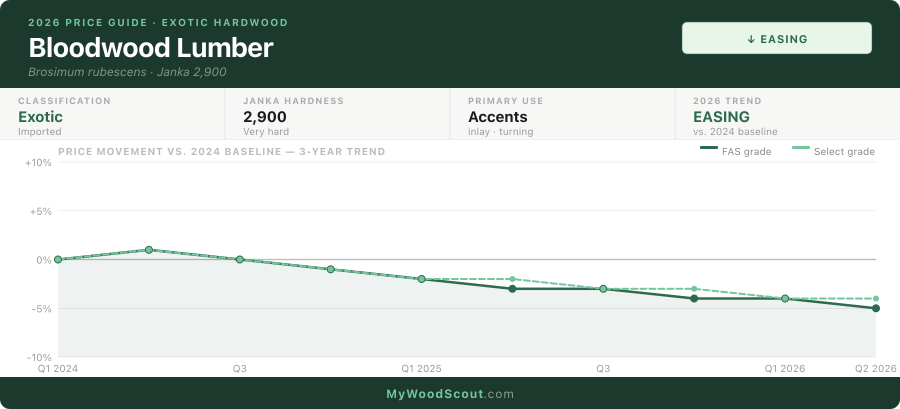
Bloodwood delivers the most vibrant and stable red color in the hardwood world, making it the go-to choice for high-end accent work and decorative inlays. At 2900 on the Janka scale, this South American exotic combines stunning visual impact with exceptional durability, explaining why fine furniture makers and turners prize it above flashier alternatives like padauk. The current easing price trend creates an unusual buying opportunity for woodworkers who have been priced out of this premium species in recent years. Unlike many reds that fade to brown, bloodwood maintains its scarlet intensity for decades under proper finishing.
I learned the hard way that bloodwood requires different glue-up timing than other hardwoods after having a joint fail on a high-end kitchen island accent strip. The natural oils interfere with PVA adhesion more than you would expect from the relatively tight grain structure, and I now always wipe surfaces with acetone immediately before gluing to ensure proper bond strength. When clients ask about red accent options, I steer them toward bloodwood over padauk every time because I have seen too many padauk projects turn disappointing brown after just a few years near windows. The extra cost upfront saves you from callbacks and disappointed customers down the road.
About Bloodwood
Brosimum rubescens grows naturally in the tropical rainforests of South America, particularly in Suriname, French Guiana, and northern Brazil, where it reaches heights of 100-130 feet with trunk diameters up to 3 feet. The species thrives in terra firme forests away from floodplains, developing its distinctive heartwood color as a natural defense mechanism against insects and decay. Commercial harvesting focuses on mature trees that have developed the deepest red coloration, making sustainable yield naturally limited.
The heartwood displays an intense scarlet red that can range from bright cherry-red to deep burgundy, often with darker streaks that create dramatic figure patterns. Grain is typically straight to slightly interlocked, with a fine, even texture that takes an exceptional polish despite the high density. The color intensity varies significantly between boards and even within individual pieces, with the most valuable cuts showing consistent deep red without brown or orange undertones. Quarter-sawn material often reveals subtle ray fleck that adds depth without overwhelming the color impact.
Bloodwood stands apart from other red species through its remarkable color stability, maintaining its vivid appearance where padauk fades to muddy brown and even cocobolo darkens significantly over time. The wood measures significantly harder than most alternatives, with density approaching that of ebony at nearly 70 pounds per cubic foot. Unlike Brazilian rosewood or other CITES-listed reds, bloodwood remains legally available, though at premium prices that reflect both scarcity and processing difficulty. African padauk offers similar initial color at lower cost, but experienced woodworkers recognize bloodwood as the superior long-term investment for visible applications.
Historically prized by indigenous peoples for tool handles and ceremonial objects, bloodwood gained recognition in European markets during the 18th century for luxury furniture inlays and musical instrument details. Modern applications focus heavily on accent work where the color must remain stable, including knife handles, pen turning, jewelry boxes, and architectural details in high-end interiors. Japanese woodworkers particularly value bloodwood for traditional joinery applications where the red color carries cultural significance. The species has become a standard offering at specialty turning suppliers, though cabinet-grade lumber remains scarce in most markets.
What Bloodwood Costs in 2026
The easing trend reflects reduced demand from overseas markets as economic uncertainty affects luxury woodworking purchases, creating a rare opportunity for domestic buyers who have been priced out over the past three years. This softening will likely continue through mid-2026 as inventory levels normalize after the supply disruptions of recent years. Savvy buyers should consider stocking up now on quality material as the fundamental supply constraints have not changed, and prices will likely resume upward movement once economic conditions stabilize.
Key Price Drivers
- Limited geographic range restricts supply to specific South American regions where sustainable harvesting faces increasing environmental pressure and regulatory oversight
- Extremely slow growth rate means trees require 80-100 years to develop commercially viable heartwood color and size
- High waste factor during processing since only the deepest red heartwood commands premium prices, with lighter sapwood and variable-colored sections often discarded
- Specialized drying requirements increase processing costs as the dense wood is prone to checking and requires extended kiln schedules
- Growing demand from high-end turner markets and boutique furniture makers who value color stability over lower-cost alternatives
- Currency fluctuations and shipping costs from remote South American sources create price volatility independent of actual wood availability
See report
Know Exactly What to Pay Before You Buy
7 thicknesses · 3 grade tiers · 5 regions · milling premiums · 3-year trend. Verified from specialty importers nationwide.
5 US regions
3-year trend
Milling premiums
Instant PDF
Get the Bloodwood Report — $9.99 →
Working Properties & Finishing
Machining
Sharp carbide tooling is essential as bloodwood will quickly dull standard HSS blades, and I recommend 80-tooth blades for crosscuts to minimize the chipping that occurs along the grain boundaries. Feed rates need to stay moderate to prevent burning, which shows as black streaks that cannot be sanded out of the red surface. The high silica content means you will go through sandpaper faster than normal, but the wood rewards careful work with an exceptional natural polish that starts appearing around 220 grit. Dust collection becomes critical both for health reasons and because the fine red dust will stain everything in your shop.
Joinery & Assembly
Bloodwood requires acetone or alcohol wiping immediately before glue application since the natural oils create weak bonds with standard PVA adhesives, and epoxy often provides more reliable results for critical joints. Pre-drilling becomes mandatory for any fastener work as the density will split even seasoned boards, and you need to drill pilot holes at least 75 percent of the final screw diameter. Mortise and tenon joints work well once you account for the hardness, but expect slower cutting speeds and frequent chisel sharpening to maintain clean shoulders.
Finishing
Bloodwood takes oil finishes beautifully without any blotching issues, and the natural oils in the wood actually enhance penetration of products like tung oil or Danish oil blends. Avoid water-based finishes as they can react with the natural tannins and create muddy color shifts that defeat the purpose of using this species. The color will deepen slightly under any finish but remains remarkably stable over time compared to other red woods, though UV protection becomes important for pieces near windows. I have had excellent results with Waterlox Original Tung Oil Finish, which enhances the natural color while providing excellent protection. Pre-treatment with a coat of dewaxed shellac can help if you need to use lacquer or other film finishes, as it provides a stable base that prevents tannin bleeding.
Target moisture content should stay between 6-8 percent for interior use, and the species moves moderately in service despite the high density, particularly in width across flatsawn boards. Bloodwood requires extended drying schedules due to the density, and rushed kiln schedules often result in case hardening that causes internal stress and unpredictable movement during machining. Plan for slightly more movement than you would expect from similar density species, particularly if working with mixed grain orientations.
Bloodwood currently falls outside CITES restrictions but faces increasing pressure from habitat loss and could move to regulated status within the next decade as South American governments tighten forestry oversight. FSC-certified material remains extremely limited, with most suppliers operating under general export permits rather than verified sustainable management plans. Buyers concerned about sourcing should request documentation of legal export and consider supporting suppliers who work directly with certified concessions, even at premium prices, to ensure long-term availability of this species.
Before You Buy — What to Know
Always examine boards under natural light and artificial lighting since bloodwood color can shift dramatically under different light sources, and what looks perfect under fluorescents may disappoint in actual use. Ask dealers specifically about the drying schedule and moisture content as improperly dried bloodwood often develops internal checking that does not show on the surface until you start machining. Avoid any pieces with brown or orange undertones as these typically indicate either sapwood inclusion or wood that will continue to fade over time, defeating the main advantage of choosing bloodwood over cheaper alternatives.
Choosing the Right Bloodwood
| Application | Recommended | Key Consideration |
|---|---|---|
| Accents | Primary use | See full species report for grade recommendations |
| Inlay | Suitable | See full species report for grade recommendations |
| Turning | Suitable | See full species report for grade recommendations |
| Handles | Suitable | See full species report for grade recommendations |
Janka Hardness: 2900 — Extremely hard. Industrial-grade durability. Requires carbide tooling.
Where to Buy Bloodwood Near You
Bloodwood is available from specialty hardwood importers and exotic wood dealers. Local availability varies — online retailers often carry a wider selection but charge a regional premium. The WoodScout directory lists specialty dealers by state.
All Hardwood Lumber Dealers →
Minnesota
Wisconsin
Pennsylvania
North Carolina
Ohio
California
Texas
Search 3,700+ hardwood dealers and sawmills across all 50 states — with ratings, reviews, and contact info.