
Cherry Lumber Prices — 2026 Buying Guide
Prunus serotina · Domestic Hardwood · Janka 950
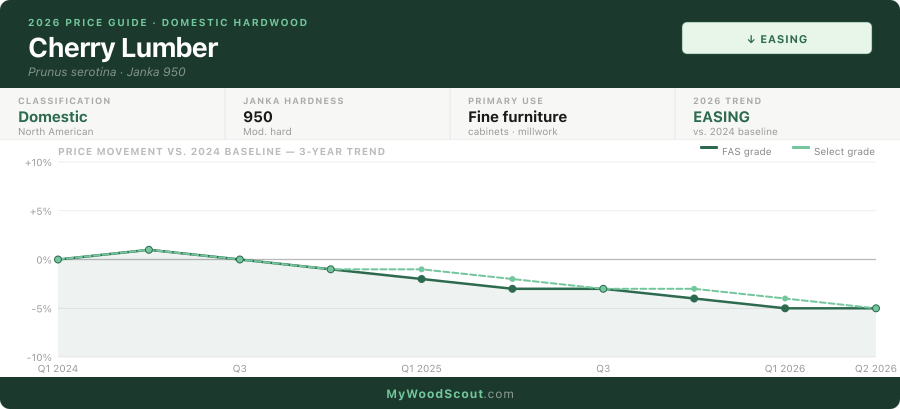
American cherry delivers unmatched warmth in premium cabinetry, transforming from pale pink sapwood to rich chocolate heartwood that deepens dramatically with age and UV exposure. Cabinet makers prize its consistent grain and exceptional workability, while furniture builders rely on its ability to take both traditional and contemporary finishes beautifully. The current price decline makes 2026 an opportune time to stock up on this quintessentially American species that remains the gold standard for high-end kitchen projects.
After installing thousands of cherry cabinet doors over the years, I have learned that the key to consistent color matching lies in understanding that boards from the same tree can vary dramatically in their aging rates. I always tell clients to expect their new cherry kitchen to look completely different in six months, and I photograph installations to show them later how beautifully the transformation occurs. One tip most buyers never hear is that you can actually slow down the darkening process by applying UV-blocking topcoats, which gives you more control over the final appearance in situations where you want to preserve that lighter, fresher look longer.
About Cherry
American cherry (Prunus serotina) grows naturally throughout the eastern United States, from Maine to Florida and west to the Great Plains, with the finest commercial timber coming from Pennsylvania, West Virginia, and the Appalachian region. The species thrives in mixed hardwood forests and reaches maturity in 60-80 years, producing some of the most sought-after lumber in North America.
Fresh-sawn cherry heartwood ranges from light pinkish-brown to deeper reddish-brown, while the sapwood appears nearly white to pale yellow, creating striking contrast that many woodworkers either embrace or carefully manage through board selection. The grain runs straight to slightly wavy with a fine, even texture that machines to a glass-smooth surface, and subtle figure occasionally appears as curly or bird’s eye patterns in select boards. The wood exhibits a natural luster that becomes more pronounced with proper finishing.
Cherry occupies a unique position between the lighter maples and darker walnut, offering more character than hard maple but greater consistency than walnut’s variable grain patterns. Unlike imported species such as European cherry, American cherry develops its signature patina more rapidly and predictably under UV exposure. The species machines cleaner than oak and exhibits less seasonal movement than ash or hickory, making it more forgiving for precision cabinetry work.
Colonial furniture makers established cherry as the premium choice for Federal and Shaker period pieces, and many museum-quality antiques showcase the wood aging to deep burgundy and mahogany tones over centuries. Modern architectural millwork frequently specifies cherry for its ability to complement both traditional and contemporary design aesthetics, while turners value the species for its dimensional stability and ability to hold fine detail in bowls and decorative objects.
What Cherry Costs in 2026
The current price decline reflects reduced demand from the custom kitchen market as higher interest rates slow residential remodeling projects, combined with steady harvest levels maintaining adequate supply chains throughout Appalachian growing regions. This easing trend should continue through mid-2026 as economic uncertainty keeps discretionary home improvement spending subdued, creating the best cherry buying opportunity in several years. Smart buyers should consider stocking up now on premium grades while prices remain favorable, as cherry prices historically rebound quickly when housing markets recover.
Key Price Drivers
- Sustainable domestic harvest cycles drive supply consistency — Pennsylvania and West Virginia sawmills process cherry on predictable rotations, creating seasonal price fluctuations as mills compete for premium logs during peak cutting seasons
- Kitchen remodeling market demand directly impacts pricing since cherry remains the preferred species for high-end residential cabinetry, with economic downturns reducing custom kitchen projects and easing lumber demand
- Grading standards create sharp price breaks between FAS and lower grades — cherry sapwood significantly reduces board grades, making clear heartwood lumber command premium pricing while creating abundant lower-grade material
- Export competition from European buyers seeking American cherry for furniture manufacturing influences domestic pricing, particularly for wider boards and premium figure that command international premiums
- Substitute species availability affects cherry pricing when walnut supplies tighten or maple prices drop, as cabinet makers switch species based on relative value and customer preferences
- Kiln drying capacity at regional mills impacts market pricing since cherry requires careful drying schedules to prevent honeycomb and checking, creating bottlenecks during high-demand periods that drive up finished lumber costs
See report
Know Exactly What to Pay Before You Buy
7 thicknesses · 3 grade tiers · 5 regions · milling premiums · 3-year trend. Verified from domestic hardwood dealers nationwide.
5 US regions
3-year trend
Milling premiums
Instant PDF
Get the Cherry Report — $9.99 →
Working Properties & Finishing
Machining
Cherry machines beautifully with standard carbide tooling, but I recommend 40-tooth combination blades for crosscuts and 24-tooth rip blades to prevent burning from the wood pitch content. Feed rates should be steady and deliberate since rushing causes burn marks that require extensive sanding to remove, particularly when ripping thick stock where blade friction builds heat quickly. The species routs cleanly with sharp HSS or carbide bits, though climb-cutting can cause minor tearout in areas where grain direction changes, so conventional routing with multiple light passes works best for complex profiles.
Joinery & Assembly
Cherry glues exceptionally well with both PVA and polyurethane adhesives, creating joints stronger than the surrounding wood when properly prepared with fresh, smooth surfaces. Pre-drilling for screws is essential since the wood hardness causes splitting near board edges, and using a tapered bit creates the cleanest results for cabinet face-frame attachments. Mortise and tenon joints cut cleanly in cherry and remain stable long-term due to the wood low movement characteristics and consistent density throughout the heartwood.
Finishing
Cherry rarely exhibits blotching problems like maple or pine, accepting both water-based and oil-based stains evenly, though many finishers prefer clear coats to showcase the natural color development over time. I recommend General Finishes Arm-R-Seal for most cabinet projects since it builds quickly, provides excellent durability, and does not interfere with the natural darkening process that makes cherry so distinctive. The wood contains minimal tannins compared to oak or walnut, so water-based finishes will not cause color shifting or chemical reactions. Oil finishes like tung oil penetrate deeply and enhance the grain dramatically, though they require more maintenance than film-forming topcoats. Expect significant color change within the first six months after installation as UV exposure transforms the pale heartwood into rich brown tones that continue developing for years.
undefined
American cherry benefits from excellent domestic forest management programs, with most commercial timber harvested from well-managed private and public forests under sustainable yield practices that maintain long-term forest health. FSC-certified cherry is readily available from major distributors, and the domestic sourcing eliminates the carbon footprint associated with imported hardwoods while supporting rural American communities. Regional availability varies significantly, with transportation costs favoring buyers in eastern markets where most cherry originates, though western buyers can still source the species competitively compared to imported alternatives.
Before You Buy — What to Know
Always inspect boards for gum pockets and pitch streaks that appear as dark lines running with the grain, as these defects telegraph through any finish and cannot be easily repaired. Ask dealers about kiln schedules since rushed drying can cause internal honeycomb defects that only appear when machining, and request to see end grain on thicker stock to verify proper drying. Look for consistent heartwood color across your purchase since boards from different trees age at different rates, and avoid mixing fresh-cut lumber with aged stock unless you plan to let everything equalize in your shop for several months before use.
Choosing the Right Cherry
| Application | Recommended | Key Consideration |
|---|---|---|
| Fine furniture | Primary use | See full species report for grade recommendations |
| Cabinets | Suitable | See full species report for grade recommendations |
| Millwork | Suitable | See full species report for grade recommendations |
| Turning | Suitable | See full species report for grade recommendations |
Janka Hardness: 950 — Moderate hardness. Suitable for most furniture and millwork applications.
Where to Buy Cherry Near You
Cherry is widely available from hardwood dealers and sawmills across the US. Use the WoodScout directory to find rated suppliers near you — many sell direct to hobbyists and small shops.
All Hardwood Lumber Dealers →
Minnesota
Wisconsin
Pennsylvania
North Carolina
Ohio
California
Texas
Search 3,700+ hardwood dealers and sawmills across all 50 states — with ratings, reviews, and contact info.